
Underwrite the merchant behind the storefront.
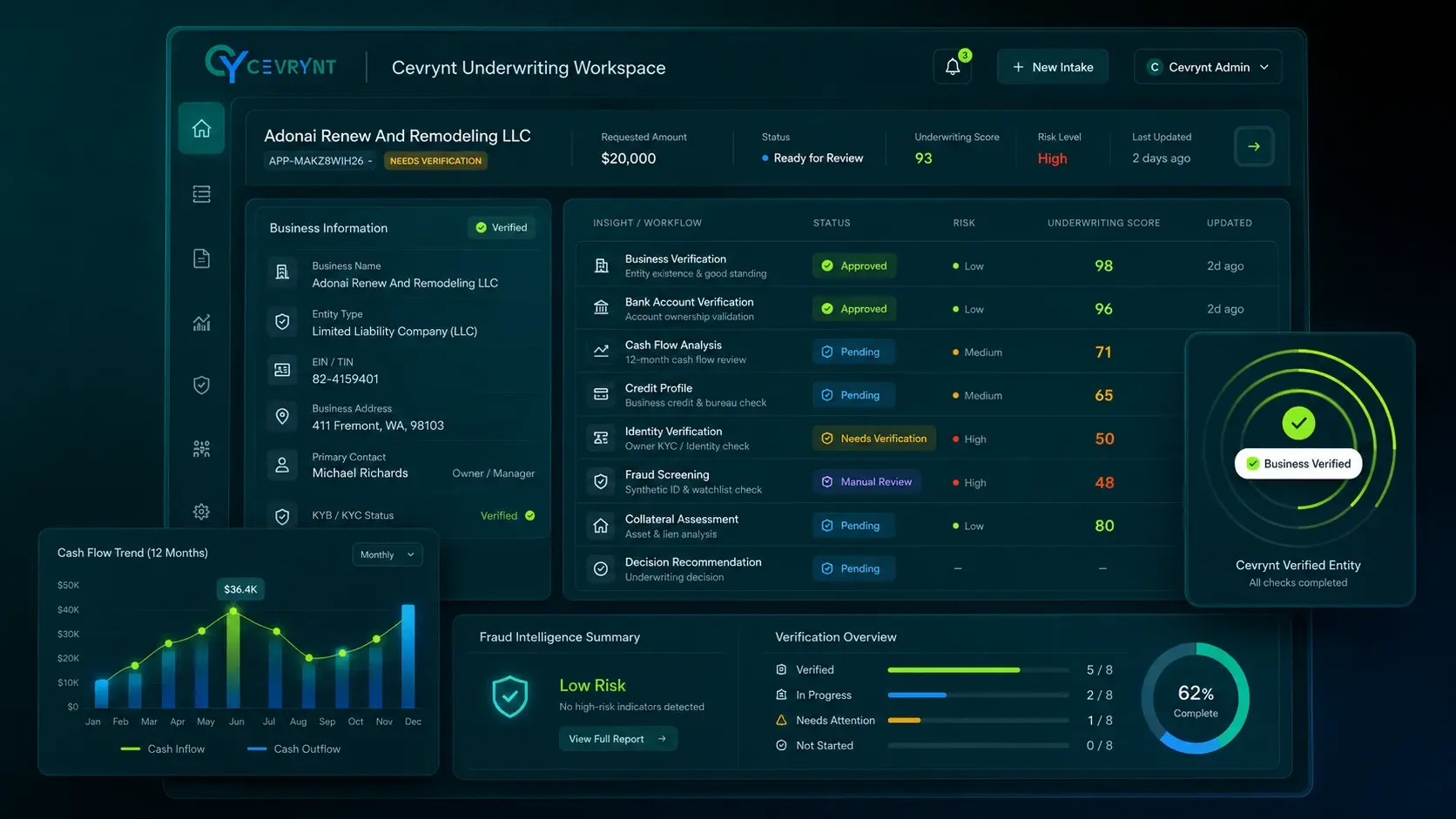
Cevrynt brings commerce performance, borrower documents, bank activity, business verification, existing obligations, and lender policy into one evidence-linked review — so platform signals become part of the underwriting decision, not a substitute for it.
OPERATING HISTORY
Fourteen months in business. Twelve months of behavior to inspect.
For an e-commerce merchant, age is only one signal. Commerce activity can show how the business has actually operated across most of its life — sales cadence, order activity, refunds, disputes, payouts, and changes in performance over time.
- 14
- months in business
- 12
- months of commerce activity available
First recorded activity
Today
Time in business shows how long the merchant has existed. The operating record shows how the business behaved during that time — including sales cadence, orders, payouts, refunds, disputes, and changes in performance across the observed period.
- 12 monthscommerce activity available across the merchant’s operating history.
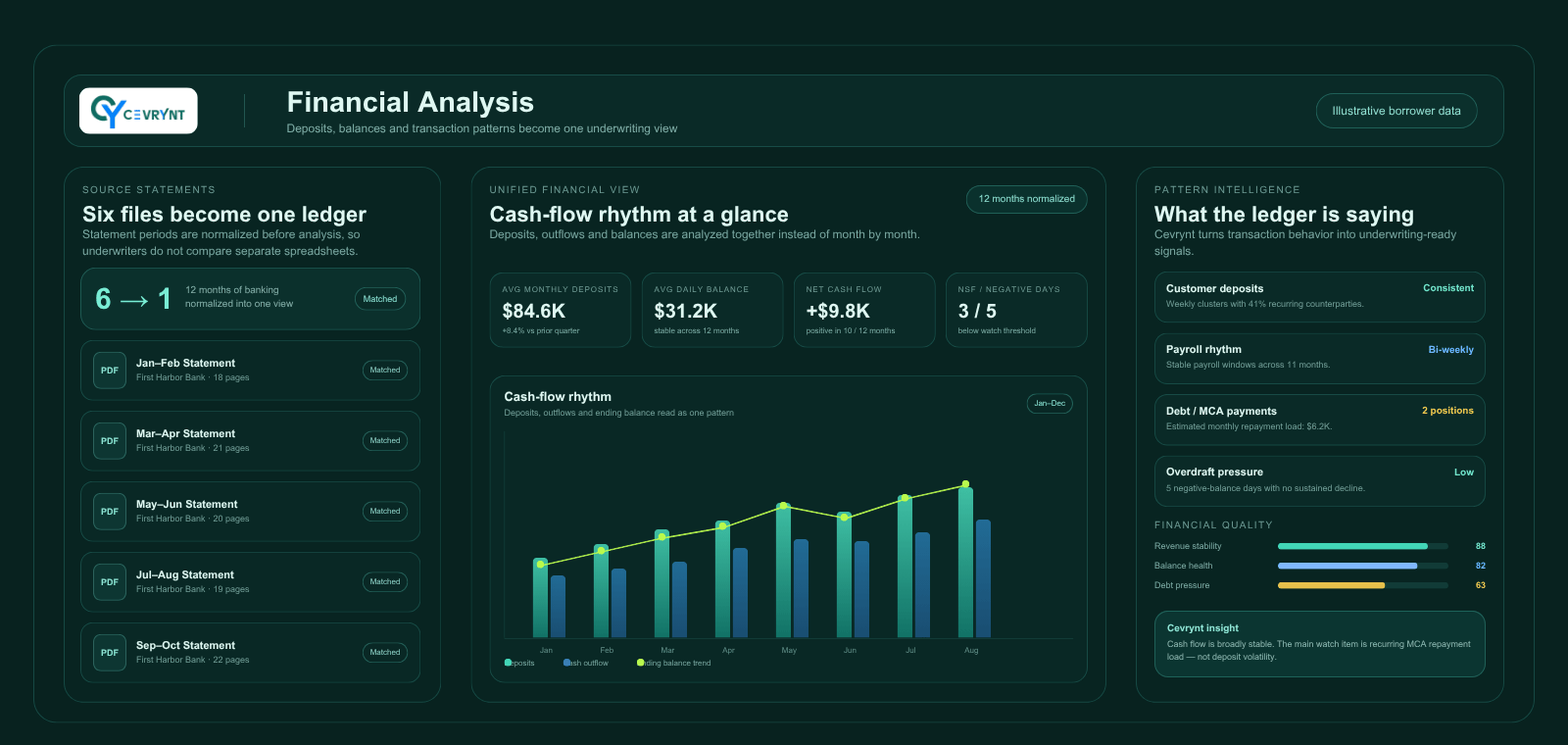
- 6 monthsbank statements reviewed for cash flow, liquidity, and repayment obligations.
- 14 monthstime in business compared with the lender-defined operating-history requirement.
COMMERCE-TO-BANK CONTEXT
The bank shows the payout. Commerce activity explains it.
A $24,850 settlement tells an underwriter what reached the bank. When approved commerce data is available, Cevrynt can bring the activity behind that settlement into the same review — sales, orders, refunds, disputes, fees, and payout adjustments.
- 06
- commerce signals behind the payout
- 01
- net settlement in the bank
What the commerce record can show
- Every individual order
- Refunds and chargebacks
- Platform fees, taken before payout
- Which channel the sale came through
- What the stock cost to buy
What the bank shows
19 AprCard settlement$24,850.00
First Harbor Bank statement · p.4 · lines 28–31
A bank settlement shows what reached the account, not the operating activity that produced it. When approved commerce data is available, Cevrynt can bring sales, orders, refunds, disputes, fees, and payout adjustments alongside the bank evidence so the underwriter can see both sides of the transaction.
Cevrynt × SHOPLINE
An underwriting partnership built around where merchants already operate.
Cevrynt and SHOPLINE are exploring merchant-financing infrastructure that brings approved commerce context closer to borrower documents, financial evidence, verification, and lender-defined underwriting policy.
Cevrynt × SHOPLINE
Partnership scope
1.
Cevrynt and SHOPLINE are working together to explore e-commerce merchant underwriting and financing workflows that bring approved commerce context closer to lender review.
Current boundaries
- 1.1Not a claim of universal live integration. Availability depends on the workflow, merchant authorization, data scope, and implementation agreed for the use case.
- 1.2Not automatic data access. Commerce data is only used when the required access and permissions are available for the approved workflow.
- 1.3Not merchant eligibility or guaranteed funding. Being on a commerce platform does not determine whether a lender will finance the business.
- 1.4Not lender decision-making. Cevrynt can bring commerce context into the underwriting review, while eligibility, pricing, approval, and final credit authority remain with the lender.
The partnership explores how approved commerce context can support e-commerce merchant underwriting. It does not imply universal integration, automatic data access, merchant eligibility, or lender decision-making.
LENDER CONTROL
Commerce signals inform the review. They do not decide the merchant.
Sales performance, operating history, refunds, disputes, payout behavior, bank evidence, and verification can all matter. Cevrynt brings those signals into the lender’s own underwriting criteria instead of collapsing them into one universal merchant score.
Universal merchant score
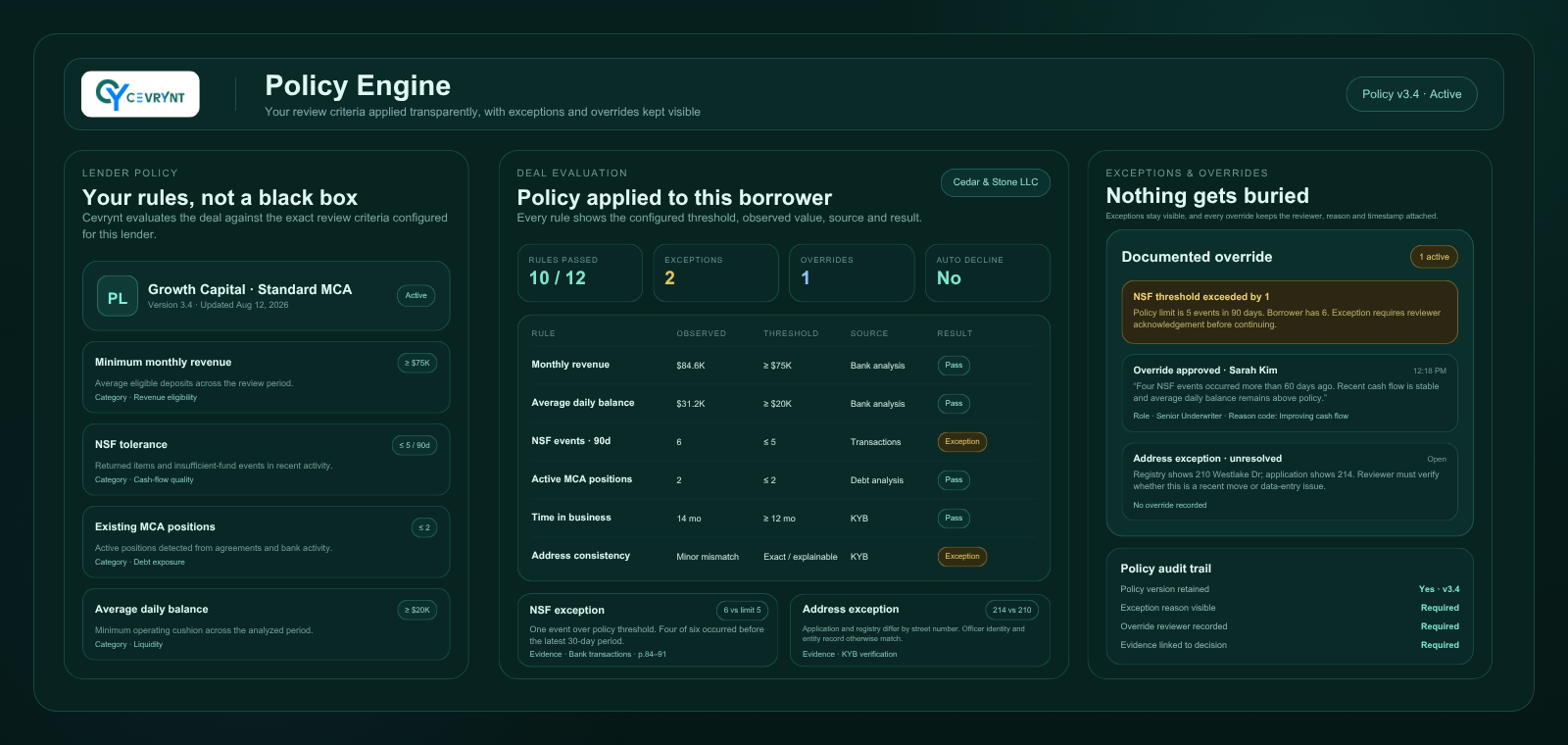
Cevrynt does not collapse commerce activity, bank evidence, verification, and policy results into one number that becomes the credit decision. The signals stay visible, the lender's rules stay explicit, and final judgment remains with the lender.
What Cevrynt produces instead
- 10 / 12policy checks resolved against the lender's configured criteria
- 02exceptions kept open with the observed value, threshold, and supporting evidence
- v3.4policy version retained with the underwriting review
- 00credit decisions issued by Cevrynt — approval, pricing, and funding remain with the lender
FOUNDER-LED E-COMMERCE UNDERWRITING REVIEW
Bring an e-commerce merchant your team already knows.
Walk through the merchant’s commerce activity, bank settlements, borrower documents, business verification, existing obligations, and lender policy in one evidence-linked review. See what the evidence supports, what still needs judgment, and where the final decision stays with your team.