
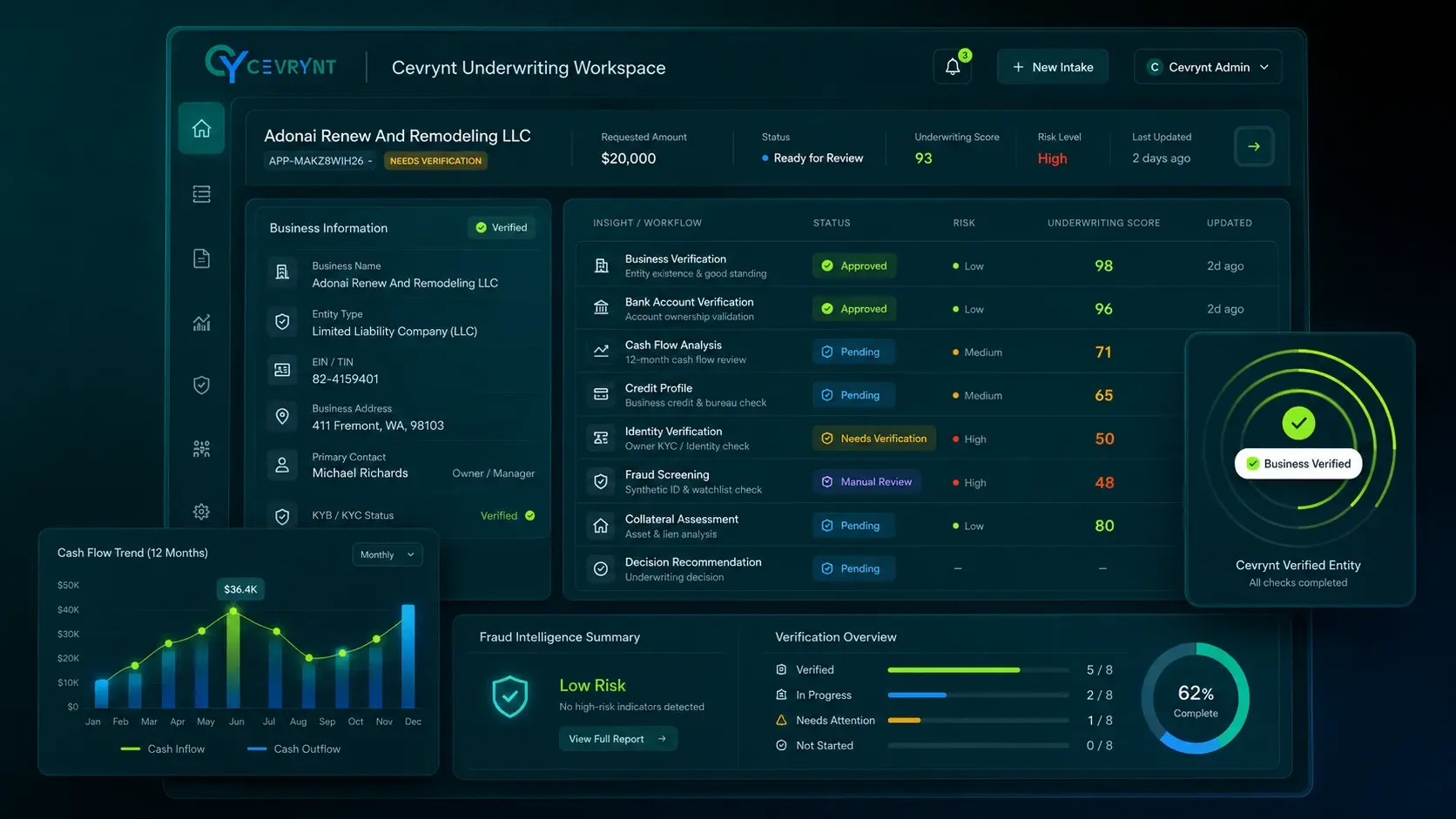
Know what the lender will find before you send the file.
Cevrynt reviews the borrower package, bank activity, existing obligations, business verification, and missing or conflicting information — so your team can send a cleaner submission with fewer surprises downstream.
SUBMISSION READINESS
Find the stip before the lender sends the file back.
Cevrynt checks the borrower package before submission and shows what is complete, what is missing, and where that missing information is likely to interrupt underwriting — so your team can fix avoidable gaps before the lender finds them.
04core package checks
03items need attention
Signed application6 of 6 bank statementsOwner identityBank proofExisting obligation disclosureBusiness verification documents
FUNDER-FACING SIGNALS
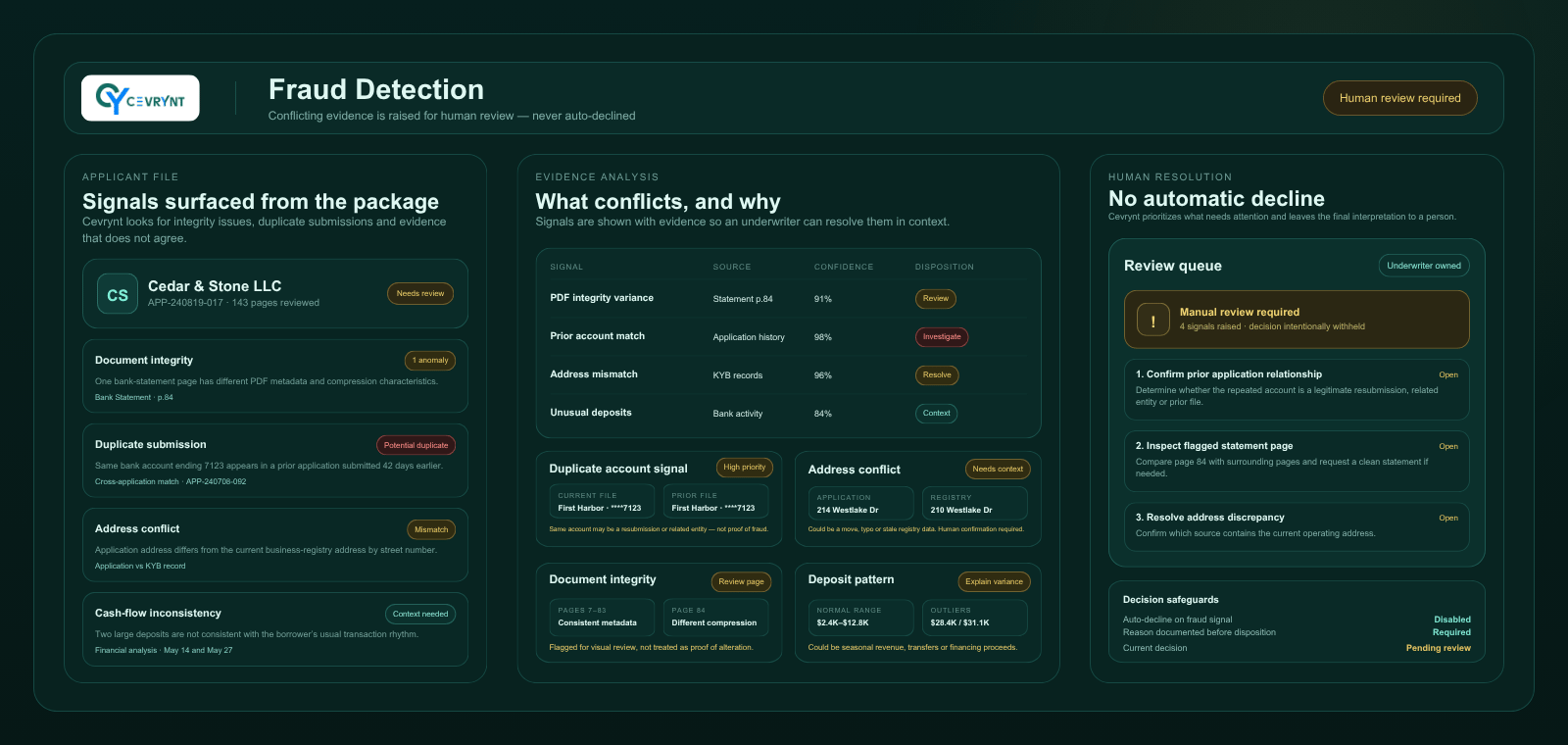
Don’t just send the file. Send the context with it.
Cevrynt surfaces the issues a lender is likely to notice in the package — duplicate submissions, document concerns, verification conflicts, and unusual cash-flow activity — so your team can answer what it can before underwriting has to ask.
04review signals surfaced
00automatic declines
What your team can add now
Provide the original bank-downloaded statement or clean source file so the lender can compare it directly.
03resolution steps still sitting open in an underwriter's queue, with the disposition intentionally withheld — every one of them a question that reaches you if the pack does not answer it first.
SUBMISSION TRIAGE
Seven open items. Know who can close each one.
Cevrynt separates what your desk can fix, what needs another borrower document, and what must stay with the lender. Your team spends time on the questions it can actually move instead of chasing every issue the same way.
07open items identified
03your desk can resolve
- Your deskDuplicate submissionLink the earlier application to the current deal and explain whether this is a resubmission, revised request, or separate application.
- Your deskCash-flow contextAdd supporting context for unusual deposits, transfers, or revenue movements already identified in the borrower package.
- Your deskExisting obligation disclosureConfirm recurring repayment obligations surfaced in bank activity and attach the relevant agreement when available.
- The borrowerSecond bank account statementsRequest the missing statement period for the additional operating account so the lender receives the complete cash-flow picture.
- The borrowerOwnership percentageConfirm the ownership split and provide the supporting company or operating document needed to reconcile the application.
- The borrowerBusiness address supportClarify the difference between the submitted and verified addresses and provide supporting evidence where needed.
- The lenderDocument integrity reviewCevrynt surfaces the document concern and supporting evidence, but whether the document is acceptable remains an underwriting judgment.
- 03Your deskResolve before submission
- 03The borrowerRequest before submission
- 01The lenderRequires underwriting judgment
SUBMISSION MAP
Turn the folder into a file the lender can navigate.
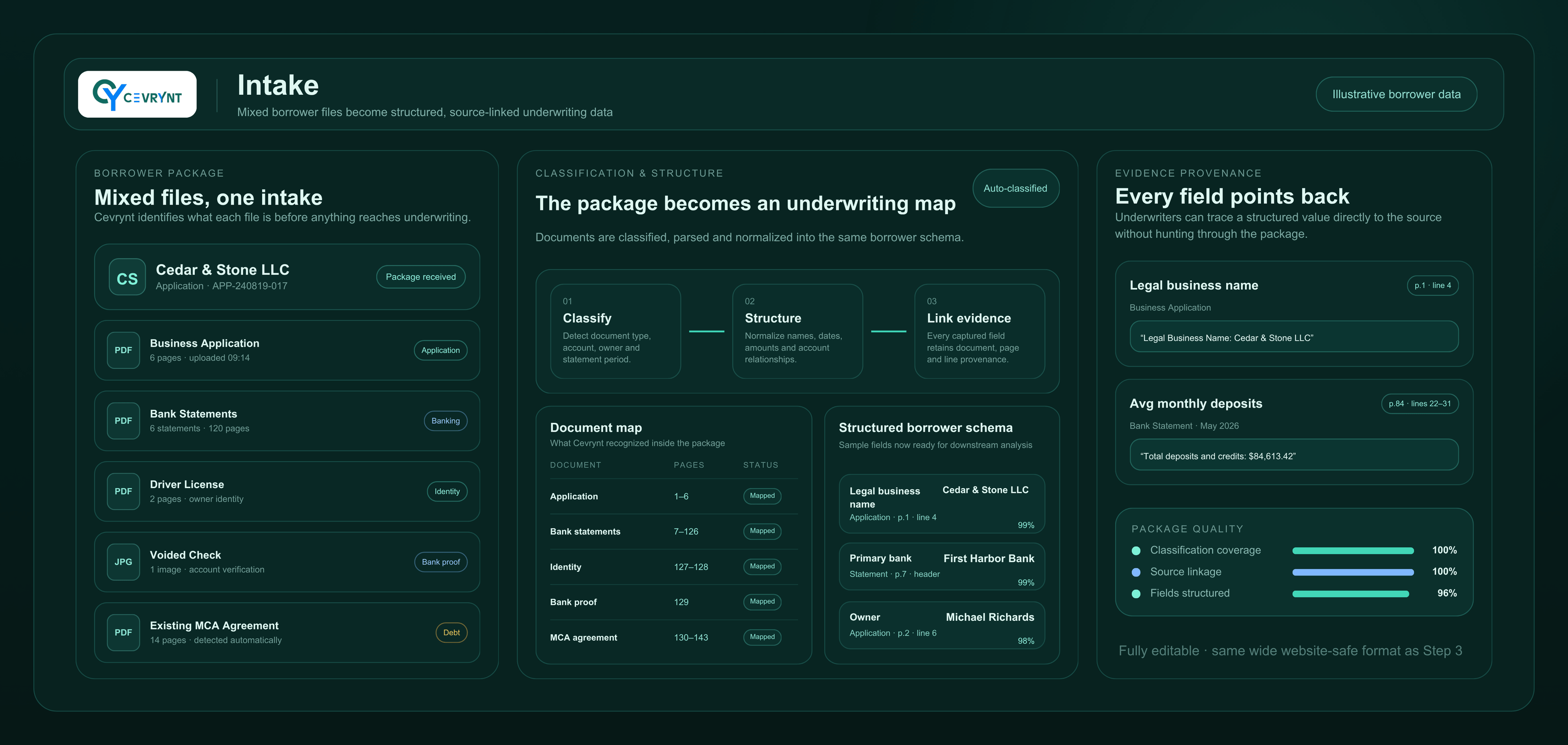
Cevrynt organizes the borrower package before handoff — classifying each document, mapping the pages, structuring the underwriting fields, and keeping important findings connected to their source.
05files organized
143pages mapped to the deal
01
What arrived?
Five submitted files are accounted for and attached to the same deal before underwriting begins.
5 files · 143 pages · one borrower package
02
How is it organized?
Cevrynt classifies each document, maps its page range, and structures the package into one underwriting record.
5 documents mapped · pages 1–143
03
Where did the finding come from?
Material underwriting values stay connected to the document, page, transaction, or source evidence behind them.
Legal business name · p.1 line 4 · monthly deposits · p.84 lines 21–31
THE RE-RUN
Add what was missing. See exactly what changed.
A new bank statement or corrected agreement goes back into the same deal. Cevrynt re-runs the affected analysis, compares it with the previous review, and shows what improved, what moved, and what is still unresolved.
02new inputs
07signals changed
01policy result moved
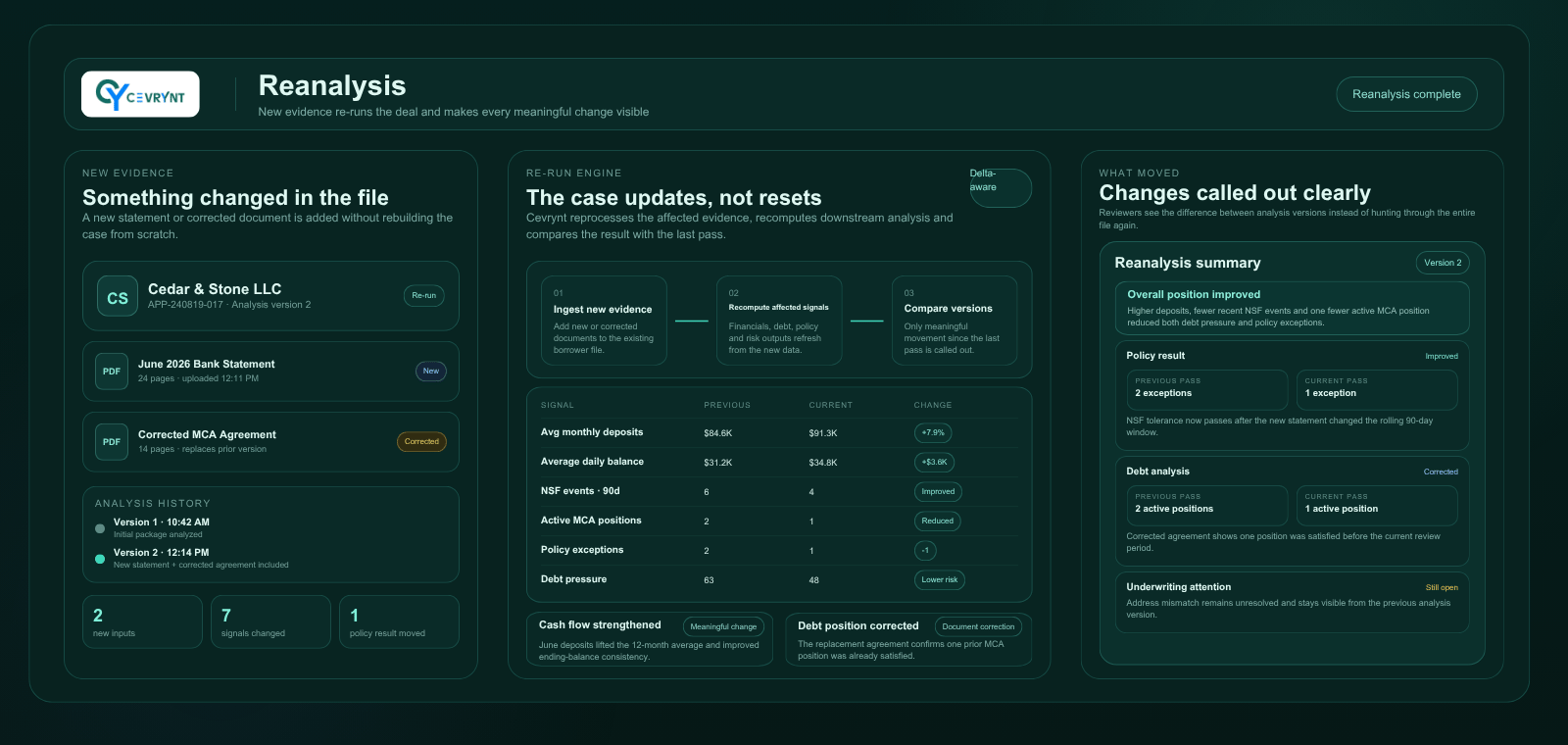
Version 1
10:42 AM
Initial borrower package reviewed as originally submitted.
Version 2
12:14 PM
One new bank statement and a corrected agreement added to the same deal.
The new financial evidence changes the cash-flow picture, but it does not explain the address discrepancy. Cevrynt carries the review item forward into Version 2 instead of silently clearing it during reanalysis.
FOUNDER-LED SUBMISSION REVIEW
Bring a deal that came back. See what should go back with it.
Walk through the borrower package, missing items, lender-facing signals, borrower follow-ups, and anything that changed since the first submission. Cevrynt shows what can be resolved before the file goes back to underwriting.